Most businesses start with the wrong question: “How can we automate everything?” A better one is: “Which repeated bottleneck already has a clear owner and a clear outcome?”
Automation doesn’t fix a messy process. It makes the mess run faster. So we think about AI adoption in three levels, and we only move to the next one when the current one is reliable.
Level 1: Visibility
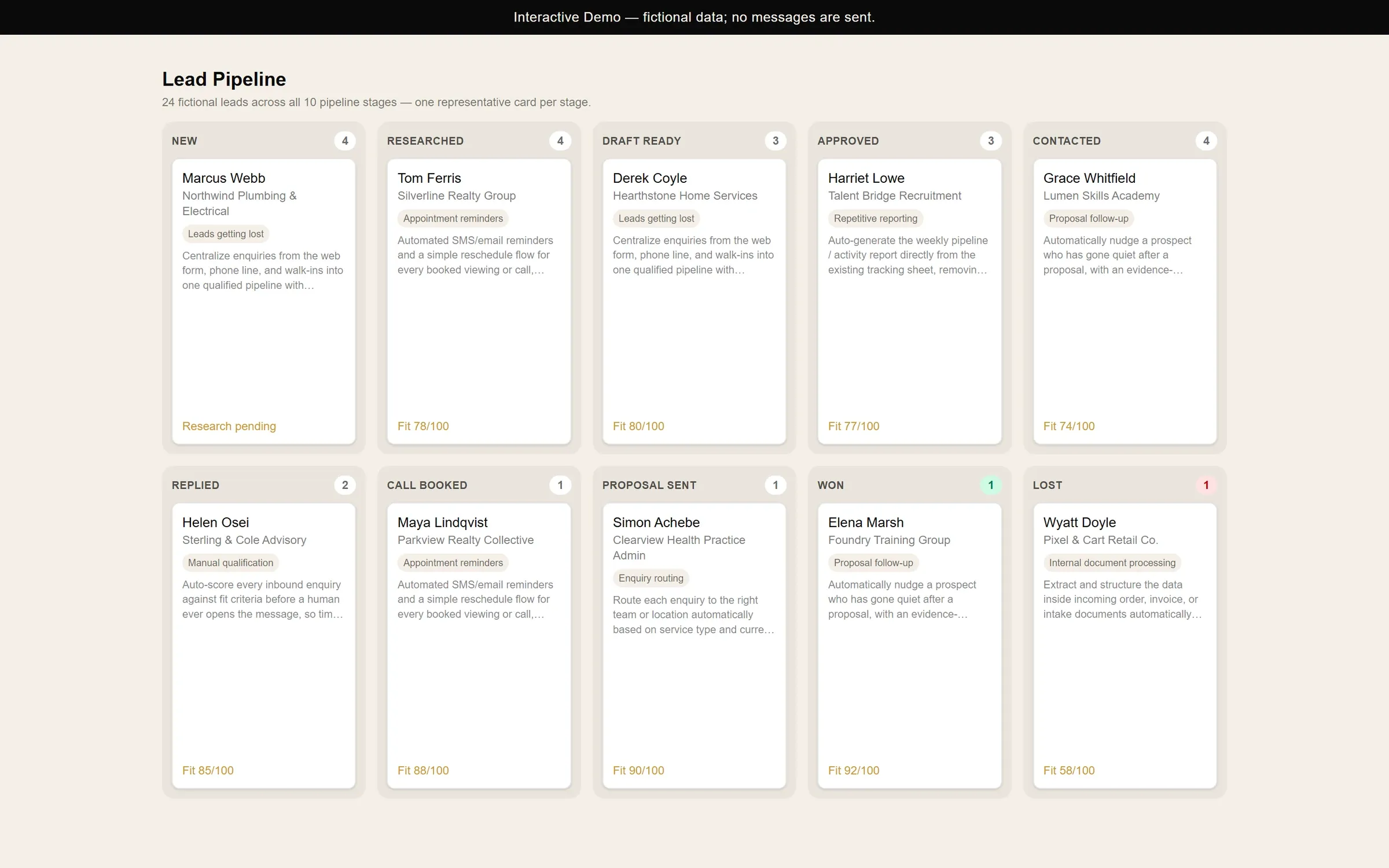
What it is: every lead lives in one list, with a clear stage and a next-action date.
What it looks like in practice:
- One place for enquiries, whether that’s a spreadsheet, a CRM or a simple database.
- A small, fixed set of stages: new, contacted, replied, call booked, proposal sent, won, lost.
- An owner and a next-action date on every open lead.
- A five-minute daily check: what’s due today?
Where AI helps: very little, and that’s fine. This level is about discipline, not intelligence.
You’re ready for Level 2 when: you can open one screen and answer “who needs a reply today?” without checking five inboxes.
Level 2: Assistance
What it is: AI prepares the work. A person decides.
What it looks like in practice:
- Research summaries for each lead, with a source link for every claim.
- A fit score that reflects your real buying criteria.
- Draft replies and follow-ups generated from that saved research.
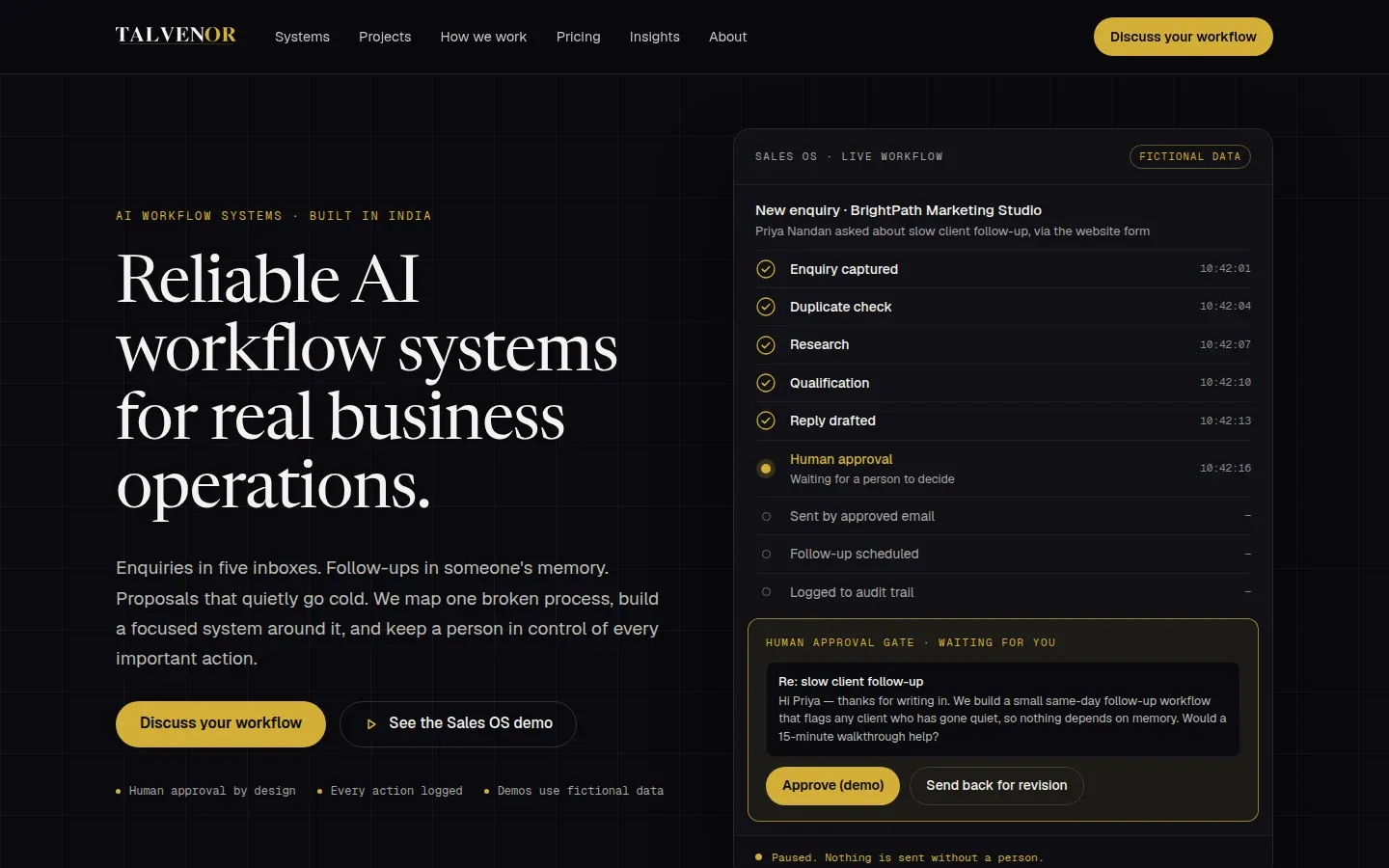
- An approval queue: every draft is approved, edited or rejected by a person before it goes anywhere.
Where AI helps: a lot. The slowest parts of sales work (reading about a business, writing a first draft) get much faster, and quality stays under human control.
You’re ready for Level 3 when: drafts are consistently approved with only small edits, the steps are written down, and one named person owns the process.
Level 3: Controlled automation
What it is: approved actions run automatically, with safeguards.
What it looks like in practice:
- Approved emails are sent through a permitted channel, within daily limits.
- Follow-ups are scheduled automatically and stop when someone replies or opts out.
- Failed jobs retry a limited number of times, then wait for a person.
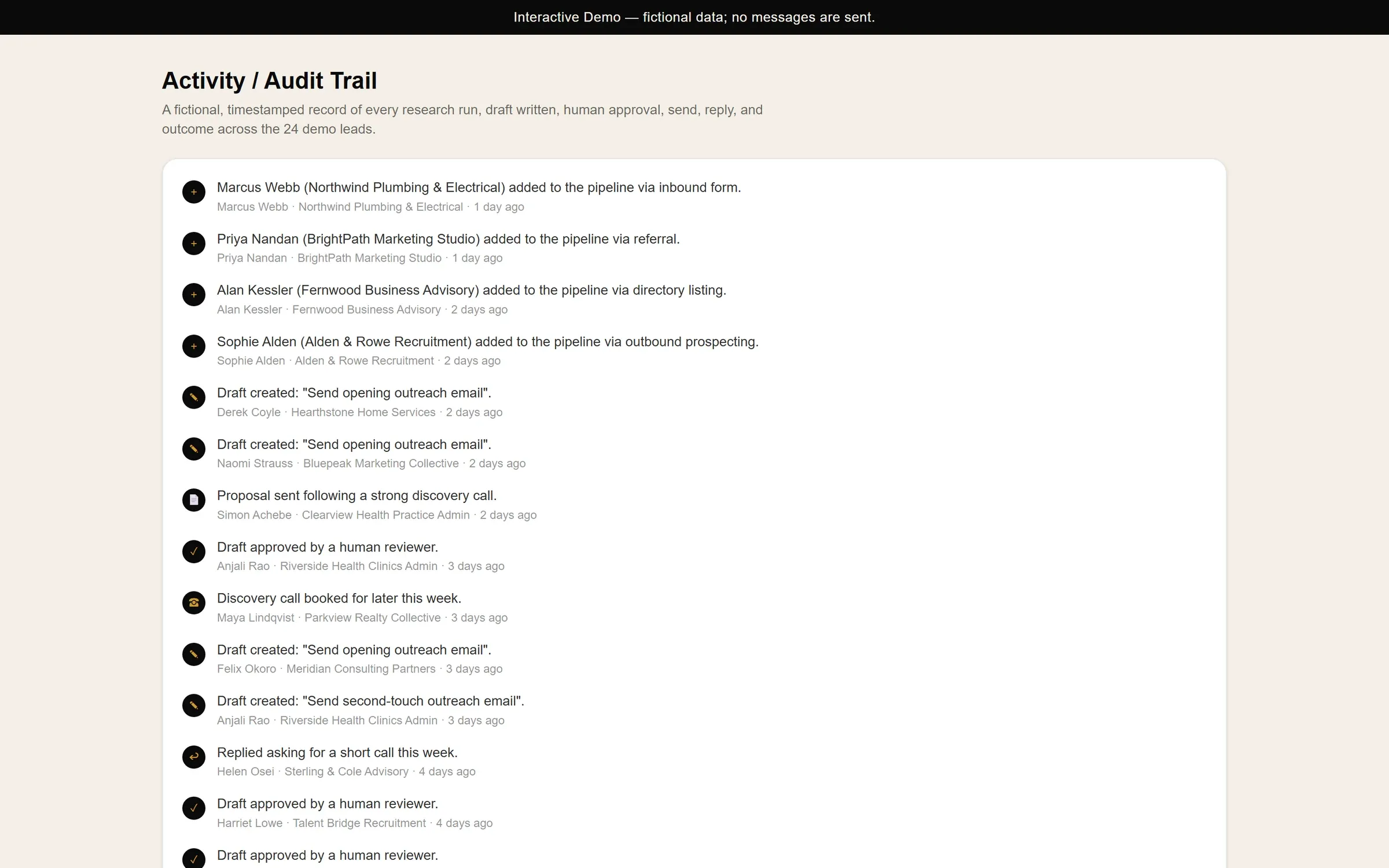
- Every action is logged with a timestamp, and there’s a pause switch for everything.
Where AI helps: the system keeps working when you’re busy delivering for clients, but only on actions a person has already approved.
What stays manual: decisions about people, money, permissions and anything on social platforms that their rules don’t allow to be automated.
The common mistake: starting at Level 3
It’s tempting to jump straight to an AI agent that finds leads, writes messages and sends them. Without Level 1, the agent has no clean source of truth. Without Level 2, nobody has checked whether its drafts are any good. The result is fast, confident, unreviewed outreach. That’s how brands and email domains get damaged.
The order isn’t glamorous, but it works: see everything, then assist, then automate what’s already proven.
A quick self-check
Ask yourself three questions:
- Can I see every open lead and its next step in one place? If not, start at Level 1.
- Does a person approve every message before it’s sent? If not, don’t automate sending yet.
- Are my follow-up steps written down and owned by one person? If yes, Level 3 may be within reach.
For a more structured answer, take the two-minute workflow readiness check. Your answers stay in your browser unless you choose to share them.
If you already know which level you’re at and want help with the next one, tell us about your workflow.